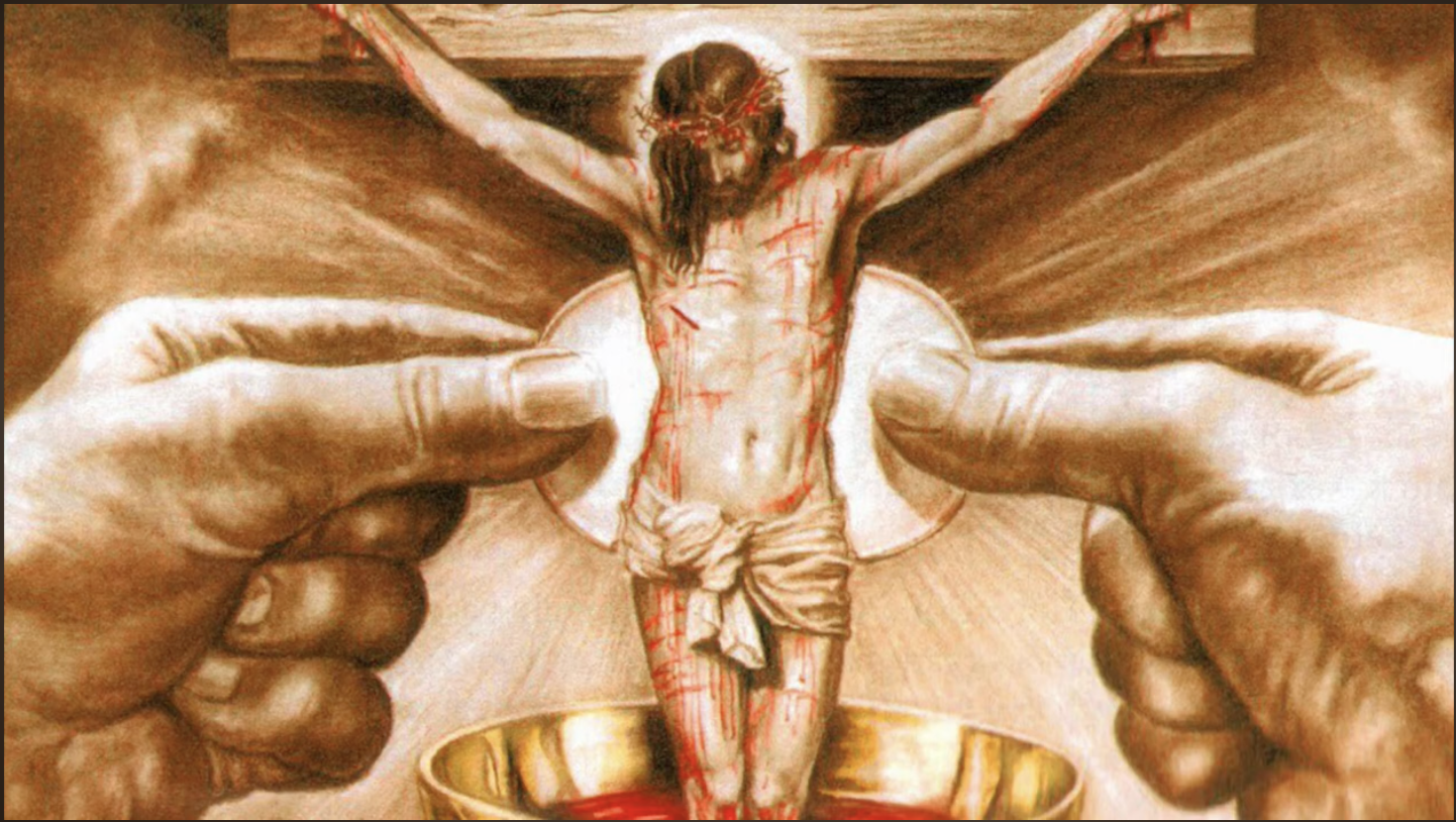
Our churches teach that the body and blood of Christ are truly present and distributed to those who eat the Lord’s Supper [1 Corinthians 10:16]. They reject those who teach otherwise.
From the Augsburg Confession, XXIV (The Mass)
“34 Because the Mass is for the purpose of giving the Sacrament, we have Communion every holy day, and if anyone desires the Sacrament, we also offer it on other days, when it is given to all who ask for it. This custom is not new in the Church. 35 The Fathers before Gregory make no mention of any private Mass, but they speak a lot about the common Mass, ‹Communion›. 36 Chrysostom says “that the priest stands daily at the altar, inviting some to the Communion and keeping back others.”
Who is invited to the Communion, and who is kept back?
To whom: Christians generally
Rationale: Frequently, to strengthen faith, commune with Christ and believers
Book of Concord reference: LC V, 33-37, 42,
To whom: Christians who are weak in faith and terror in conscience
Rationale: Given to strengthen their faith
Book of Concord reference: FC Ep VII, 9; FC SD VII, 69
To whom: Uninstructed in the Faith
Rationale: Communed after being examined and catechized; the Sacrament could be received to their harm
Book of Concord reference: Ap XXIV, 1 – AC XXV, 1 – LC V, 2
To whom: Ungodly (Public, unrepentant sin), those without faith and repentance
Rationale: Denied communion while unrepentant
Book of Concord reference: LC V, 58-60 – SA III, 9 – SD FC VII, 68
To whom: Heterodox believers and false teachers
Rationale: Barred, the Sacrament confesses doctrinal unity. Why? We should: give no impression of unity, communicate the truth of the gospel, not strengthen idolators in their idolatry, not grieve believers or weaken their faith, avoid false prophets, do not be accomplices of false teachers
Book of Concord reference: FC Ep X 5-7 – FC SD X 5-6, 10-11, 14-16, 22-23, 21(Context: Ecclesiastical Practices) – Ap VII/VIII (fellowship of faith) – FC Intro 14 – FC SD XII, 7-8
Martin Chemnitz, post-Book of Concord

From Examination of the Council of Trent, Volume II, p. 232
“The celebration or use of the Lord’s Supper is a public confession of that doctrine in which the communicants agree with one another. Therefore those who are of divergent doctrine should not be admitted to the same use of the Sacraments.”
From Ministry, Word, and Sacraments p. 121
“Participation in the Sacraments is a testimony of agreement in doctrine and faith with the church in which the Sacraments are administered.”
Note from Reader’s Version
By the time the Augsburg Confession was written, deep divisions had arisen among the various reformers concerning the Lord’s Supper. The Lutherans were very careful to distance themselves from those who reject that the body and blood of Christ are in fact truly present in His Supper and distributed to all those who eat and drink. Transubstantiation, consubstantiation, or any other human speculation asks the wrong question: how is Christ present? Lutheranism has no theory or philosophical explanation of how Christ is present. Rather, Lutherans insist on answering the what of the Lord’s Supper. We believe, teach, and confess that of the bread, Christ said, “This is My body,” and of the wine, “This is My blood.” These are given and shed “for the forgiveness of sins” (Matthew 26:26–28). We reject any teaching that is contrary to our Lord’s Word. (See also Ap X; SA III VI; LC V; FC Ep VII and SD VII.)
Comparison of Article 10 of the Augsburg Confession
invariata(1530)
De Cœna Domini docent, quod corpus et sanguis Christi vere adsint, et distribuantur vescentibus in Cœna Domini; et improbant secus docentes.
Touching the Supper of the Lord they teach, that the body and blood of Christ are there present indeed, and are distributed to those that eat of the Lord’s Supper; and they condemn those that teach otherwise.
variata (1540)
De Coena Domini docent, quod cum pane et vino vere exhibeantur corpus et sanguis Christi, vescentibus in Coena Domini.
Touching the Supper of the Lord they teach, that, together with the bread and wine, the body and blood of Christ are truly exhibited to them that eat of the Lord’s Supper.